Catholic Daily Readings
MEMORIA

Memorial of Saint Leo the Great, Pope and Doctor of the Church

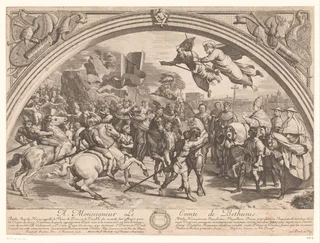
Samuel Bernard, after Raphael, Meeting of Pope Leo the Great and Attila — complete artwork
November 10, 2026
Reading 1

Titus 2:1-8, 11-14

Beloved:
You must say what is consistent with sound doctrine,
namely, that older men should be temperate, dignified,
self-controlled, sound in faith, love, and endurance.
Similarly, older women should be reverent in their behavior,
not slanderers, not addicted to drink,
teaching what is good, so that they may train younger women
to love their husbands and children,
to be self-controlled, chaste, good homemakers,
under the control of their husbands,
so that the word of God may not be discredited.

Urge the younger men, similarly, to control themselves,
showing yourself as a model of good deeds in every respect,
with integrity in your teaching, dignity, and sound speech
that cannot be criticized,
so that the opponent will be put to shame
without anything bad to say about us.

For the grace of God has appeared, saving all
and training us to reject godless ways and worldly desires
and to live temperately, justly, and devoutly in this age,
as we await the blessed hope,
the appearance of the glory of the great God
and of our savior Jesus Christ,
who gave himself for us to deliver us from all lawlessness
and to cleanse for himself a people as his own,
eager to do what is good.

Responsorial Psalm

Psalm 37:3-4, 18 and 23, 27 and 29

R.    (39a) The salvation of the just comes from the Lord.
Trust in the LORD and do good,
that you may dwell in the land and be fed in security.
Take delight in the LORD,
and he will grant you your heart’s requests.
R.    The salvation of the just comes from the Lord.
The LORD watches over the lives of the wholehearted;
their inheritance lasts forever.
By the LORD are the steps of a man made firm,
and he approves his way.
R.    The salvation of the just comes from the Lord.
Turn from evil and do good,
that you may abide forever;
The just shall possess the land
and dwell in it forever.
R.    The salvation of the just comes from the Lord.

Gospel Acclamation

John 14:23

R. Alleluia, alleluia.
Whoever loves me will keep my word,
and my Father will love him,
and we will come to him.
R. Alleluia, alleluia.

Gospel

Luke 17:7-10

Jesus said to the Apostles:
“Who among you would say to your servant
who has just come in from plowing or tending sheep in the field,
‘Come here immediately and take your place at table’?
Would he not rather say to him,
‘Prepare something for me to eat.
Put on your apron and wait on me while I eat and drink.
You may eat and drink when I am finished’?
Is he grateful to that servant because he did what was commanded?
So should it be with you.
When you have done all you have been commanded, say,
‘We are unprofitable servants;
we have done what we were obliged to do.’”

Daily Reflection

The paradox of Christian service is that we are called to be both grateful recipients of God's love and selfless servants who render our lives as a debt of gratitude.

In the Gospel, Jesus teaches us about the nature of service through a parable. A servant returns from a long day's work, and instead of being welcomed to the table, is expected to prepare a meal for his master. The servant's obedience is not motivated by the promise of reward or recognition but by the fact that it is his duty to serve. Jesus drives home the point that we, too, are unprofitable servants, doing what we owe to God.

This teaching is rooted in the broader context of Christian discipleship. Saint Paul, in his letter to Titus, exhorts believers to live in a manner consistent with sound doctrine, urging them to reject godless ways and worldly desires. He reminds us that the grace of God has appeared, saving us and training us to live temperately, justly, and devoutly.

The Psalmist echoes this theme, reminding us that the salvation of the just comes from the Lord. Our trust in God's goodness and providence enables us to live a life of obedience and service, not out of fear or obligation, but out of love and gratitude for the gift of salvation. Ultimately, our service is not about earning God's favor but about responding to the love that has already been poured out upon us.

Samuel Bernard, after Raphael, Meeting of Pope Leo the Great and Attila, 1625–1657 — complete artwork
Artwork

Meeting of Pope Leo the Great and Attila

Artist

Samuel Bernard (French, 1615–1687), after Raphael

Date
1625–1657
Materials
Etching and engraving
Collection
Rijksmuseum

About This Artwork

Pope Leo approaches from the right with his attendants. Across from him, Attila and his followers turn toward the two figures in the sky. The print places the two groups beneath an arch and retains its original inscription below.

Samuel Bernard made the print after Raphael’s fresco in the Vatican. The composition joins the encounter between Leo and Attila with the tradition of Saints Peter and Paul appearing above them.

Sources & image credit

Public-domain image. Rijksmuseum, Amsterdam. Collection record RP-P-OB-41.771.

Historical notes follow the cited collection and research sources. No museum endorsement is implied.